
Empanadas de Carne and a Spanish Conquistador
In the beginning…
The best place to start any good project is, I suppose, at the beginning. And that takes us back to Spain. In 1683, twelve generations ago, my great-grandfather (x10), Alonso Rael de Aguilar traveled from Lorca, Spain (a coastal town in Murcia) to help Don Diego de Vargas reconquer the newly coined “El Reino de Nueva Mexico” (the Kingdom of New Mexico). With him, he brought his mistress, Maria Micaela Lopes.
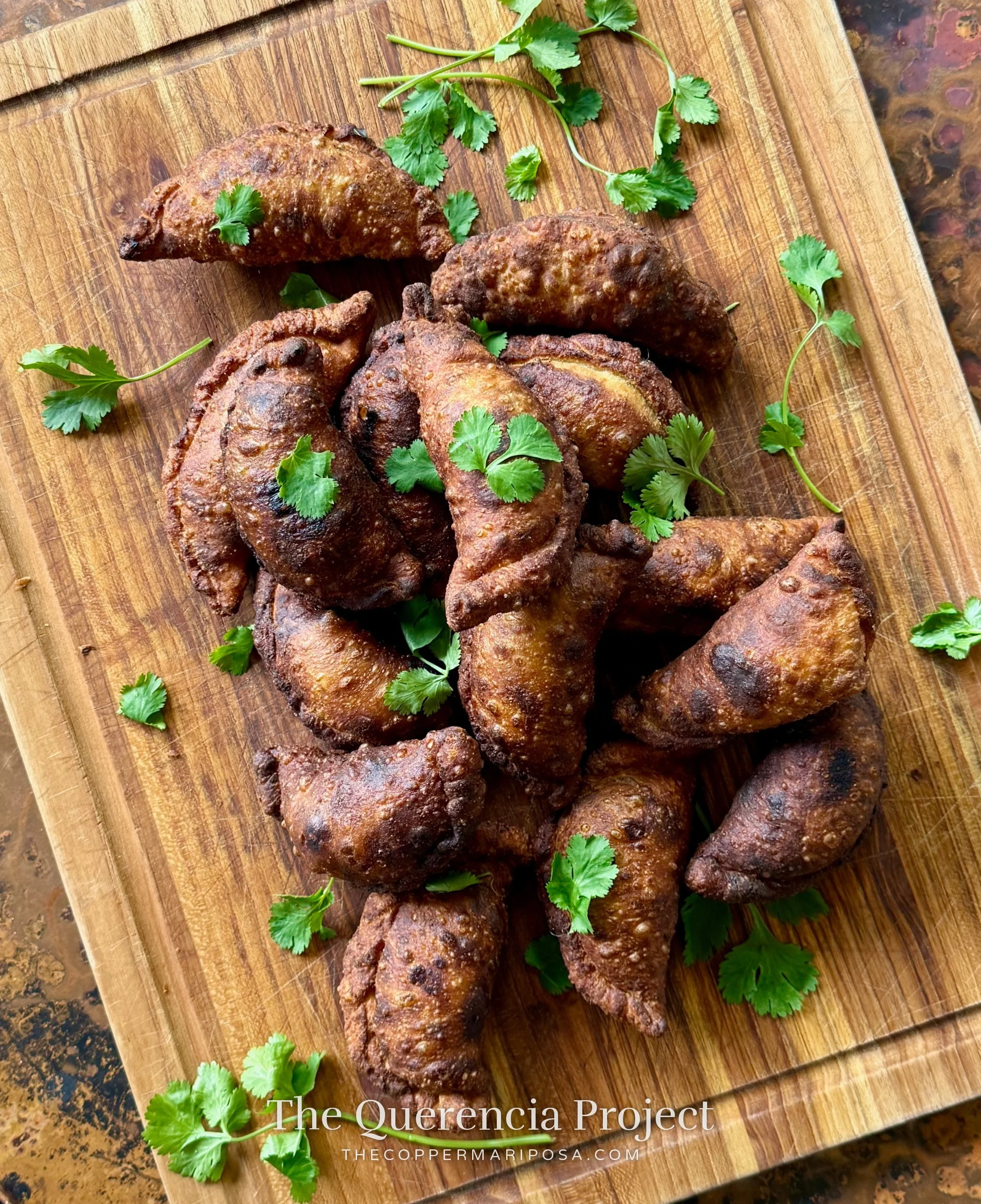
Keep in mind, this “Nueva Mexico” was not the cute, cubed Land of Enchantment you see in your mind’s eye on the United States map. The particular region of Nueva Mexico actually covered territory that is now in the state of Texas, starting around El Paso and moving north to the Taos area of modern day New Mexico state. Spend a little time geeking out on maps of Spanish colonized areas in the North American continent,Virreinato de Nueva España (Viceroyalty of New Spain), and you’ll be amazed at how these guys really went for it. That said, the native Puebloans and other tribes put up a real fight for a couple hundred years to preserve their territory. Then the United States started eyeing the west and they got involved…
But we don’t have time for a deep dive on Spanish colonial history or the US expansion right now. Let’s cut to the chase. Sometime after arriving in El Paso, Alonso’s mistress Maria gave birth to their first born son, Pedro Marcial Rael – the first “New Mexican” and new world Rael. Alonso Rael continued living in the El Paso area doing conquering-type-things (?), and also found himself a local wife, Josefa Ana Garcia Noriega.
Conquistador food
So, what did my great-grandfather (x10) Alonso and his fellow soldiers eat to fuel that kind of work? Spain’s colonizing stamp on the food world: they ate empanadas.
What’s kind of cool is that the empanada evolved from an even more ancient food, stemming from Lebanese sfeehas and neighboring Levantine hand-held pies. The tradition of filling bread dough with good things and baking or frying it traveled. The Moors eventually brought this brilliant concept to Spain possibly as early as the 7th century. By the beginning of the 12th century (1188 CE), an empanada was carved on the Portico of Glory in the Santiago de Compostela Cathedral (in an artistic warning about gluttony…which means: people were big fans of the pastry by this point, why else depict their favorite food?). The Galician version was a large meat pie, which was cut into pieces and served. But it didn’t take long for them to create empanadillas (smaller versions) which were great for the road. Literally. Empanadas are truly the ultimate travel food. Wrapping a fortifying protein into the center of a sustaining bread dough and baking or frying it not only offers a longer shelf life for the meat or fish tucked inside, it is the ancient equivalent of a one-pot meal except better because you can carry it wherever you go. It’s all right there.
So it would make sense that this is the kind of food that the Spaniards continued to make as they literally divided and conquered. Anywhere Spain sent its people to colonize, you will find an empanada today to reflect the local flavors and ingredients of the place. It was and is a staple.
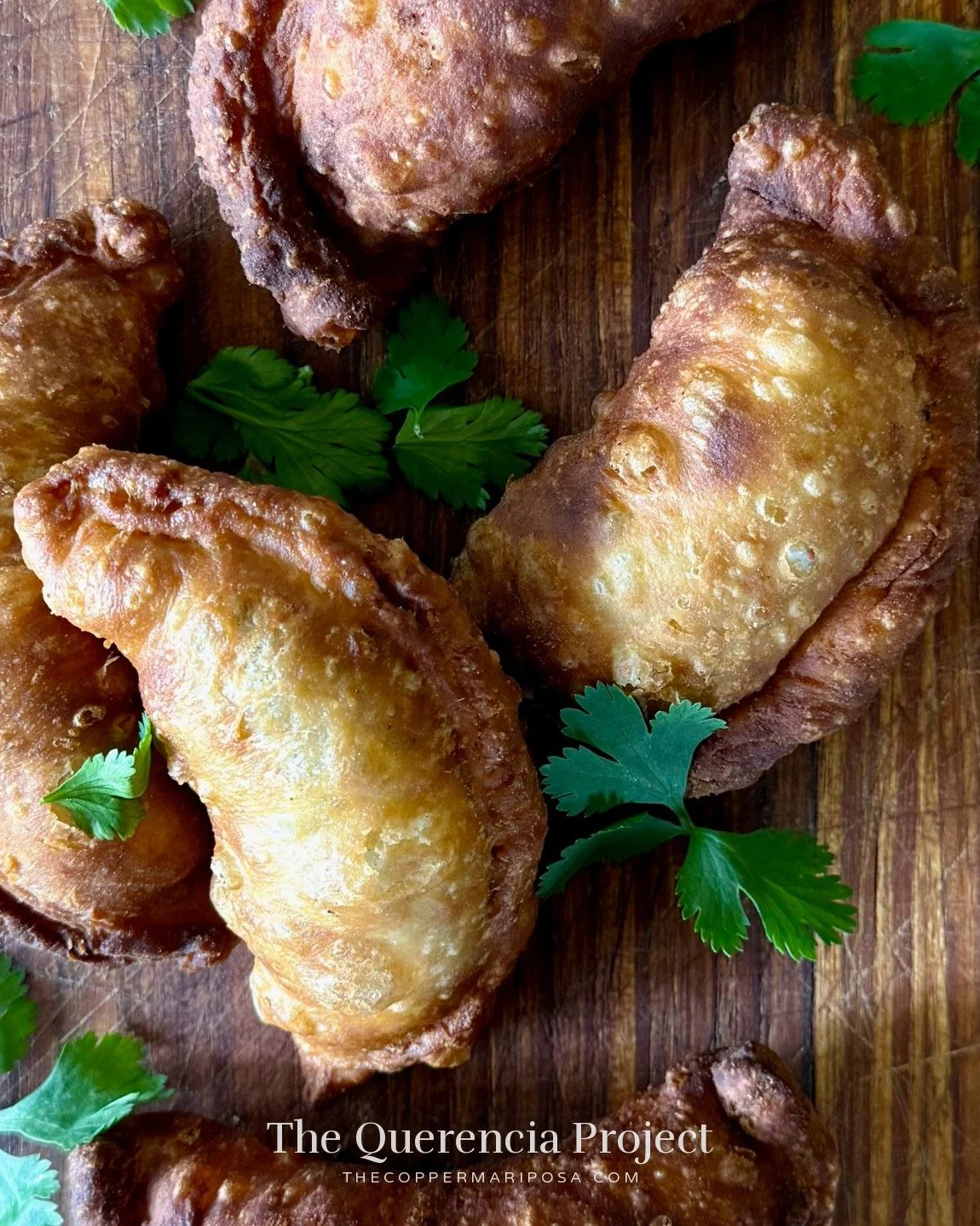
1939: New Mexican Empanadas
In 1939 in northern New Mexico, Señora Cleofas Jaramillo began her cookbook with this statement: “In this collection of Spanish recipes, only those used in New Mexico for centuries are given, excepting one or two Old Mexico recipes.”
The empanada may be the oldest tradition in the book.
Sra. Cleofas Jaramillo wrote in her introduction to Shadows of the Past, her first book on the folklife of Hispano New Mexico: “As a descendant of the Spanish pioneers, I have watched with regret the passing of the old Spanish customs and the rapid adoption of the modern Anglo customs by the new generation.”
After reading an article on Spanish and Mexican cookery where the recipe for tortillas instructed “Mix bread flour with water, add salt,” (gasp! eww!) she is later quoted saying: it was “nicely written and illustrated, but very deficient as to knowledge of our Spanish cooking…. And still these smart Americans make money with their writing, and we who know the correct way sit back and listen.” So, taking matters into her own hands, she wrote her own books. And she founded La Sociedad Folklórica de Santa Fe in 1935 to preserve the traditions of her ancestors in northern New Mexico. Born and raised in Arroyo Hondo, she lived in El Rito, NM, and later Santa Fe. She passed away in El Paso, TX, in 1956 at the age of 79.
I, for one, am so grateful that this woman took it upon herself to actively preserve cultural traditions of New Mexico and leave a legacy for not only her family, but her people. These recipes were written when my grandparents were teenagers. These foods would have been as familiar to them as the fragrance of piñon trees and the sweeping vistas outside of their little village of Questa, NM.
empanadas (fried pies)
by Señora Cleofas Jaramillo | The Genuine New Mexico Tasty Recipes
“Prepare the dough as for sopaipas. Take a piece the size of a large English walnut, roll out thin and round. Have prepared the filling made from ground beef, cooked tongue or ground, cooked pork; add seedless raisins, piñon nuts, spices and port or some other wine. Place 1 tsp. of this mixture on one end of the little round tortilla. (Any kind of pie filling not too juicy may be used). Fold over the other end, press the two ends together, and twist edge into firm little roll. Fry in deep fat.”
A modern edit
There you go. Enough to go on? This recipe is a great reminder that anyone reading a cookbook back in 1939, could cook. For background info, the sopaipas recipe says to use “regular biscuit dough, omitting shortening, stiff so it will not stick to board, and add 1 tsp. sugar and 1 egg.” I, however, do not have a biscuit recipe from Sra. Jaramillo in this book. So, where are we? I thought about it, and I realized, a stiff dough which doesn’t stick is ideal for a hot kitchen. Any kind of fat in the dough would cause problems if it melted, especially when you need to have full control of the dough to seal it well before frying. But, glory be, we have refrigeration these days, and most home kitchens aren’t sweltering while using a hot wood burning stove (though if they are, they will have no use for my revised recipe). Therefore, I decided that the modern version of this dough could actually benefit from a little flakiness (XO…butter…XO). But still, where do I begin with choosing an empanada dough recipe? I looked at several options out there “on the line,” as my grandma would say, and none felt similar enough to this basic instruction until I found Angela Dimayuga’s version. This Filipino empanada dough recipe was simple enough to hold to the integrity of the dough recipe Sra. Jaramillo described, but had the addition of butter, which I knew would create a light and flaky pastry. Originally intended for 40 empanadas (a full party), I cut Ms. Dimayuga’s recipe in half to match the proportions of the original recipe (for example: 1 egg) and I was off and running.
For the seasoning of the meat, I used flavors and spices which are listed in the back of Sra. Jaramillo’s cookbook in the section: A Primer of New Mexican Herbs and Spices. Onion, garlic, cumin, cinnamon, and cilantro would have appeared regularly in New Mexican kitchens.
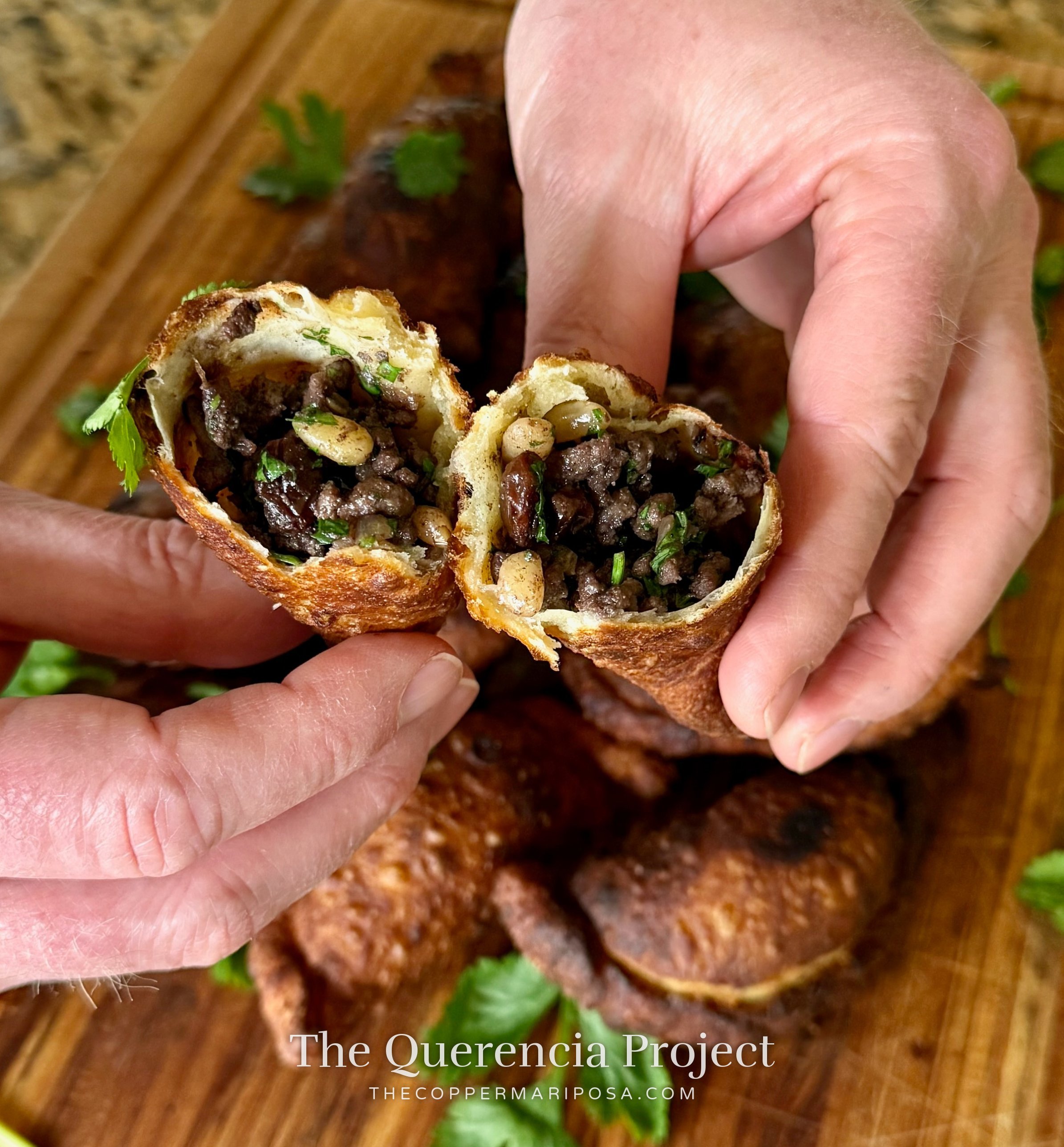
empanadas de CARNE (beef empanadas)
Recipe by Stephanie Kunstle, with dough recipe adapted from Angela Dimayuga, NYTimes Cooking
Watch a quick tutorial HERE.
Yield: 20-ish empanadas
As Sra. Jaramillo mentions, this recipe can also be made with ground pork or beef tongue. I think lamb would be nice, too.
For the Dough:
1 egg
2 tbsp milk
1.5 tsp. salt (I used pink salt)
2 and ¼ cups all purpose flour, plus more as needed
1 stick (½ cup) butter, cold, and diced into pea-sized cubes
1 Tbsp. white vinegar
About ⅓ cup Ice water (almost 6 Tbsp)
6 cups oil for frying (avocado oil or olive oil if you’re careful to keep the temp under 410F)
For the Filling:
1 lb. ground beef
2 Tbsp. extra virgin olive oil
1 small onion, chopped in small-ish cubes
2 large garlic cloves, minced
1 tsp cumin
½ tsp. Cinnamon
½ cup raisins
½ cup piñon nuts
¼ cup wine (I used some Cabernet Sauvignon)
Salt to taste
1 bunch cilantro, about ½ bunch chopped fine and the other half can be used for garnish
Prepare the Dough:
Combine the flour, salt, and mix well in a large bowl. Add the butter and cut it in with a pastry cutter or fork, or work quickly with your fingers. Combine until mixture is “sandy,” with tiny lumps.
In a separate bowl, whisk egg, milk, and vinegar together. Add to the flour mixture, then slowly add the ice water, mixing as you go with a fork then working with your hand to bring the dough together.
Press and fold the dough together with the palms of your hands, being careful not to overwork until smooth-ish. Place the dough on a lightly floured countertop and cut into 4 equal pieces. Smear each piece along the counter with your palm, folding and smearing 3-4 times. This will help distribute the fat and create a flaky pastry.
Form the dough into 4 logs, about the thickness of a small sausage (2-inches thick), and wrap each individually in plastic wrap. Refrigerate until firm, about an hour.
Prepare the Filling:
In a large sauté pan, heat the olive oil over medium heat. Add the onion, stirring frequently, letting the onion soften but not crisp, for about 10 minutes.
Add the beef, breaking it up as you brown it. Sprinkle the meat with about a teaspoon of salt, continuing to stir.
After about 5 minutes, when the meat is nearly browned, sprinkle the cumin and cinnamon over the mixture, continuing to stir.
Add the minced garlic, and cook for another minute or two until fragrant.
Add the raisins, stir to combine, then add the piñon nuts, stirring them for about 2 minutes, watching the piñon nuts carefully, so they don’t burn. You want them to become just light golden in color.
Once they’ve toasted a little, add the wine and cook it down, stirring, until the liquid has evaporated.
Taste the mixture and season with additional salt if needed. It should taste like “oooohhhh-mmmmmm” not like “huh,” when the salt is right.
Remove from heat, pour meat filling into a clean bowl and refrigerate for 15-20 minutes. You can also just let it come to room temp in the pan, but just be conscious of how long the meat is out as you make your empanadas.
Make the Empanadas:
Pour some cold water in a little bowl. You’ll dip your finger into this when you’re sealing the empanadas.
In a large pot or Dutch oven, heat about 2 inches of oil (up to 6 cups) over medium-high heat (to 365F).
While the oil is heating, lightly flour the surface of your clean countertop. Cut the logs into 5 coins each. Roll each coin into a thin round, about a 4 and ½ inch circle. Lightly dust and stack your empanada rounds, and feel free to pop them on some parchment on a plate in the fridge to keep them cool.
Cover a sheet pan in a layer or two of paper towels.
After you’ve rolled out the 20 rounds, pull out your meat and stir in the chopped cilantro. Then fill one side of the round with a heaping tablespoon of the meat mixture. Dip your finger in the cold water and line that side of the round with water. Fold the dough over and seal gently by pressing the dough shut. Working from one side, tuck the lip of the empanada inward, continuing to roll along the edge until the empanada is sealed. Continue to assemble your empanadas, checking your frying oil’s temperature every now and then, adjusting your flame accordingly. Once the oil is hot, you can begin to fry your empanadas. Fry until golden and the dough is slightly bubbled. Note: the flour on the surface of the empanada will fall to the bottom of your pot and may darken and burn, depending on your oil’s heat. It’s ok. You’re not eating that, but it looks a bit rough. Carry on!
Place your fried empanadas on a paper toweled tray briefly, before adding to your serving dish or board. I honestly love to serve many things in a big pile on a cutting board. Somehow, it’s more luxurious than a typical dish or bowl. Sprinkle the empanadas with some fresh cilantro leaves just before serving.
Enjoy them while they’re hot or room temperature.
Provecho!
-S-